4.9-Star Rated
Your home is getting smarter, but your electrical system needs to keep up. Smart devices like automated lights, thermostats, and security systems all depend on proper wiring and power supply to work correctly. A smart home electrician specializes in installing and supporting these connected devices so they run safely and reliably.
Smart home electricians handle everything from upgrading your electrical panel to installing dedicated circuits for your automation system. They understand both electrical codes and how modern smart devices connect to your home network. This knowledge helps them plan installations that avoid overloaded circuits and connectivity problems.
Whether you want to add a few smart devices or build a fully automated home, working with a qualified electrician in Ithaca and Tompkins County protects your investment. They can identify which upgrades your electrical system needs before you install new technology, preventing equipment damage and ensuring your smart home works the way you expect it to.
In this article, you will learn about:
Keep reading to understand what goes into a smart home installation that actually works, and why the electrical side of the job matters as much as the technology itself.
Many smart devices need more than just a Wi-Fi connection to work properly. Your home's electrical system may need updates to support new technology safely and efficiently.
Homes built before the 1990s often lack neutral wires in their switch boxes. Most smart switches require a neutral wire to maintain constant power for wireless communication. Without this wire, your smart lighting options become limited.
Older homes may also have aluminum wiring or outdated cloth-wrapped wiring that creates compatibility issues. According to the U.S. Consumer Product Safety Commission, homes wired with pre-1972 aluminum are 55 times more likely to have wire connections reach fire hazard conditions than homes wired with copper. These older systems weren't designed to handle the constant low-level power draw that smart devices require. An electrician can add neutral wires to existing boxes or recommend alternative solutions.
Knob-and-tube wiring, common in homes built before 1950 and still found in many Ithaca neighborhoods like Fall Creek and Collegetown, poses serious safety risks when paired with modern smart technology. This wiring type lacks grounding and can't safely support smart home electrical upgrades.
Smart switch installation involves more than replacing a traditional switch. The electrical box must be deep enough to accommodate the larger smart switch body and its wiring connections. Standard boxes in older homes are often too shallow.
Many smart switches need specific wiring configurations that differ from conventional switches. Three-way and four-way switch setups require careful rewiring to maintain functionality. An electrician ensures these connections meet current electrical codes.
Some smart lighting systems need dedicated circuits to prevent interference with other devices. Motion-activated lights and automated dimming systems draw power differently than standard switches. Professional installation prevents flickering, connection drops, and premature device failure.
Smart home devices add continuous electrical load to your circuits. Security cameras, smart thermostats, doorbell cameras, and hub devices all draw power constantly. Your existing circuits may not have capacity for these additional demands.
An electrician can calculate your total electrical load and determine if your panel needs upgrading. They can install dedicated circuits for high-demand smart devices like electric vehicle chargers or whole-home automation systems. This prevents tripped breakers and potential fire hazards.
Attempting DIY electrical work often leads to code violations that create safety risks. Improper wiring can damage expensive smart devices or void their warranties. Licensed electricians understand local codes and ensure your smart home upgrades function reliably.
Smart lighting systems give you better control over your home's energy use while making daily routines easier and safer. These upgrades work with your existing electrical setup to provide automated schedules, motion-activated features, and enhanced security around your property.
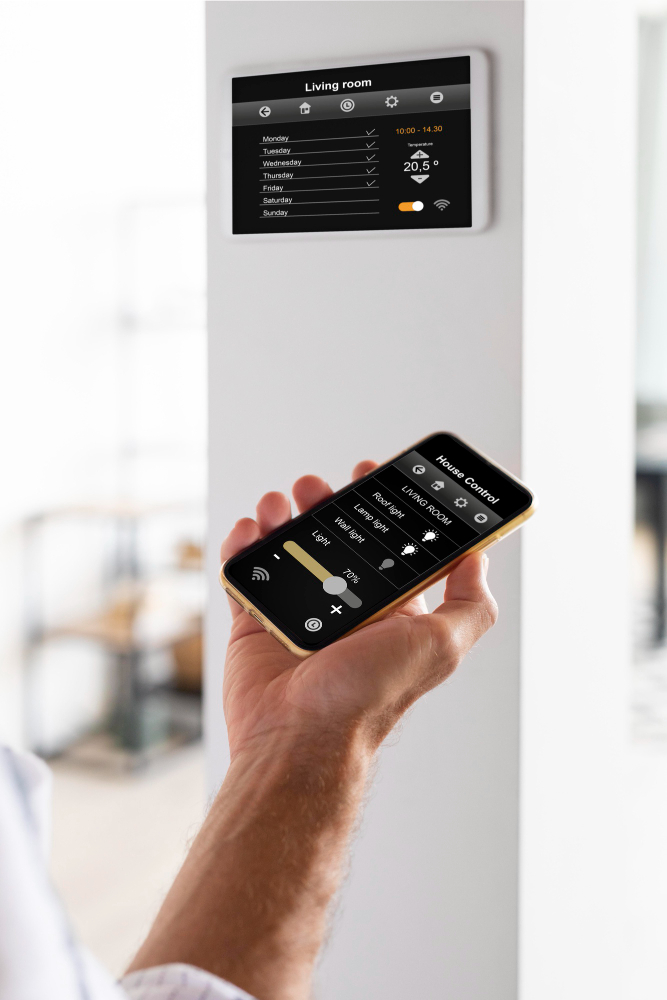
Automated lighting systems let you control lights from your phone or voice assistant without touching a switch. You can set schedules that turn lights on before you wake up and off when you leave for work. These systems learn your patterns over time and adjust automatically.
Smart bulbs and switches connect to your home's Wi-Fi network through your existing wiring. Most installations take about 30 minutes per room when done by a qualified electrician. The systems work with platforms like Alexa, Google Home, and Apple HomeKit.
Energy savings add up quickly with automated lighting. According to the U.S. Department of Energy, LED bulbs use at least 75 percent less energy than traditional incandescent bulbs, and the average household saves about $225 per year by switching to LED lighting. Scheduling features prevent lights from staying on in empty rooms, and dimming capabilities extend bulb life and reduce electricity costs even further.
Motion sensor lighting activates automatically when you enter a room or hallway at night. This prevents trips and falls in dark spaces without requiring you to search for light switches. The sensors detect movement within a specific range and turn lights on instantly.
Bathroom and hallway installations are most common for nighttime safety. The lights can dim to lower levels during evening hours to avoid harsh brightness. Most sensors allow you to adjust sensitivity and timeout duration.
Battery-powered sensor lights work in areas without nearby outlets. Hardwired options provide more reliable operation and don't require battery changes. A smart home electrician can integrate sensors with your existing circuits during installation.
Outdoor smart lighting creates the appearance that someone is home even when you're away. You can control exterior lights remotely and set random patterns that simulate normal activity. Motion-activated floodlights illuminate your property when movement is detected.
Pathway and porch lighting improves visibility around entry points. Smart outdoor fixtures withstand weather conditions and integrate with security cameras and alarm systems. You can receive phone notifications when outdoor motion sensors activate.
Timer functions ensure exterior lights turn on at dusk and off at dawn automatically. Geofencing technology detects when you arrive home and turns on lights before you reach the door. Professional installation ensures outdoor fixtures have proper weatherproofing and electrical protection that meets local building codes.
Smart home systems need stable power sources and strong network connections to work properly. Separating power lines from data cables and planning for future device loads prevents common automation failures.
Your smart devices rely on consistent Wi-Fi or hardwired network connections to communicate with each other and respond to commands. When your router sits too far from devices or walls block signals, you'll notice delayed responses or devices that stop working completely.
A home automation electrician can install network outlets in strategic locations throughout your home. This lets you place Wi-Fi access points or mesh network nodes where they provide the best coverage.
Key network infrastructure elements include:
Low-voltage wiring for your network should stay at least 12 inches away from electrical cables. This prevents interference that causes connection drops and slow performance.
Smart devices placed far from power outlets often rely on extension cords that create safety risks and messy cable runs. Planning outlet locations before installing devices saves time and improves your home's appearance.
Your smart thermostats, door locks, and cameras each need power in specific locations. A licensed electrician should install outlets where you plan to mount these devices rather than forcing you to work around existing electrical boxes.
Voice assistants and smart displays work best in central locations like kitchens and living rooms. Light switches with smart controls need proper electrical boxes that fit the slightly larger smart switch bodies.
Security cameras mounted outdoors require weatherproof electrical boxes and GFCI protection. Indoor cameras near bathrooms or kitchens also need GFCI outlets for safety.
Whole-home automation systems with multiple devices can draw significant power from your electrical panel. Adding dedicated circuits prevents your smart devices from competing with other appliances for power.
Your electrical panel needs capacity to support new circuits. An electrician should calculate your current electrical load and determine if your panel can handle additional circuits or needs an upgrade.
Devices that benefit from dedicated circuits:
Each dedicated circuit provides 15 to 20 amps of power exclusively for your smart home equipment. This prevents breaker trips when other household items turn on and keeps your automation running smoothly.
Battery backup systems connected to these circuits keep your security cameras and door locks working during power outages. Your electrician can wire critical devices through an uninterruptible power supply for continuous operation. A standby generator provides a more comprehensive backup that keeps your entire smart home system running through extended outages.
Smart electrical panels give you detailed data about your home's power usage and let you control individual circuits from your phone. These systems track energy consumption at the circuit level and alert you to problems before they become expensive repairs.
Traditional breaker boxes simply distribute electricity throughout your home without providing any information about consumption. Smart panels monitor every circuit in your electrical system and display this data through a mobile app.
You can see exactly how much power each appliance or circuit uses at any given moment. This includes major loads like air conditioning units, water heaters, and electric vehicle chargers.
The panels update consumption data continuously throughout the day. You can view your usage by hour, day, week, or month to identify patterns. Many systems also track costs based on your utility rates, showing you exactly what each appliance adds to your monthly bill.
Some smart panels integrate with solar systems and battery storage. They act as an energy controller that decides whether to use grid power, solar energy, or stored battery power based on rules you set.
Smart panels detect abnormal electrical patterns that could indicate failing equipment or safety hazards. The system sends alerts to your phone when it notices unusual power draws or potential issues.
You receive notifications when circuits approach their maximum capacity. This early warning prevents overloaded circuits from becoming fire hazards. Regular panel maintenance combined with smart monitoring gives you the clearest possible picture of your system's health.
The panels also identify phantom loads from devices that consume power even when turned off. You can see which outlets continue drawing electricity and take action to eliminate waste.
If a circuit breaker trips, you get an immediate notification with details about which circuit failed. This helps you troubleshoot problems faster without checking the physical panel.
Detailed consumption data reveals which appliances and systems use the most electricity in your home. You can make informed decisions about which devices to replace with more efficient models.
Smart panels let you set automated rules for managing power. You can schedule high-energy appliances to run during off-peak hours when electricity rates are lower. Some systems automatically reduce power to non-essential circuits when you approach your target energy budget.
The data shows you the impact of behavior changes. When you adjust your thermostat or modify appliance usage, you see the exact reduction in consumption and cost savings. This feedback helps you develop more efficient energy habits over time.
Modern electrical safety features give homeowners real-time monitoring and automatic protection against common hazards. These upgrades work together to prevent fires, reduce electrical risks, and improve security around your property.
Smart smoke detectors connect to your home network and send instant notifications to your phone when they sense smoke or carbon monoxide. You get alerts even when you're away from home, which means faster emergency response times. A professionally installed fire alarm system takes this concept further by connecting detectors, alarms, and monitoring into a single coordinated network.
These devices communicate with each other throughout your house. When one detector senses danger, all connected units sound their alarms. This network approach helps everyone in your home hear warnings no matter where they are.
Key features include:
Many models distinguish between different types of threats. They can tell the difference between cooking smoke and actual fire, which reduces false alarms that cause people to ignore warnings.
Automated shutoff systems monitor your electrical circuits and cut power when they detect dangerous conditions. These systems prevent overheating, electrical fires, and damage to your appliances.
Ground-fault circuit interrupters (GFCIs) shut off power within milliseconds when they sense electrical current leaking from a circuit. You need these devices in areas near water like bathrooms, kitchens, and outdoor outlets. According to the Electrical Safety Foundation International, GFCI protection has contributed to an 80 percent drop in electrocutions and a 93 percent drop in consumer product electrocutions since these devices were first required in homes in 1975.
Arc-fault circuit interrupters (AFCIs) detect dangerous electrical arcs that can start fires inside walls. The CPSC estimates that AFCIs could prevent more than 50 percent of the electrical fires that occur every year.
Smart circuit breakers take protection further by sending alerts to your phone when problems occur. You can also control power to specific circuits remotely through an app. This feature lets you turn off forgotten appliances or shut down power to areas of your home during vacations.
Smart security lighting activates automatically when motion sensors detect movement near doors, walkways, and dark corners of your property. This immediate illumination helps you see potential threats and navigate safely at night.
These systems connect to your home network for remote control and scheduling. You can adjust brightness levels, set timers, and create lighting patterns that make your home look occupied when you travel.
Motion-activated lights deter unwanted visitors while conserving energy compared to lights that stay on all night. Many models include adjustable sensitivity settings to avoid triggering from small animals or wind-blown objects. You can link security lighting to cameras and alarm systems for complete perimeter monitoring.
Smart home wiring mistakes can damage expensive equipment and create systems that don't work together properly. Licensed electricians prevent these problems through proper installation and planning.
Wrong voltage or improper connections can ruin your smart devices before they even power on. Smart switches, thermostats, and other automation devices require specific voltage levels and wiring configurations to function safely. When you connect a low-voltage device to standard household current, you can destroy the internal circuits instantly.
Many smart home devices use low-voltage wiring for communication between components. This includes systems like motorized shades, security cameras, and multi-room audio. A professional electrician knows how to separate these low-voltage lines from standard electrical circuits to prevent interference and damage.
Reversed polarity is another common wiring mistake that DIY installers make. This happens when the hot and neutral wires get switched during installation. While some devices might still turn on, reversed polarity creates safety hazards and can slowly damage sensitive electronics over time.
Licensed electricians also ensure proper grounding for all smart devices. Without correct grounding, power surges can travel through your automation system and destroy multiple connected devices at once. Professional smart home wiring services include surge protection and proper grounding to protect your investment.
Different smart home brands use various communication protocols that don't always work together. You might install a Z-Wave hub with Zigbee devices, only to find they can't communicate. Professional installers know which protocols work together and can design a system where all your devices connect properly.
Device placement also affects how well your smart home works. Wi-Fi-based devices need strong signals to function reliably. Electricians understand how building materials like concrete, metal studs, and thick walls block wireless signals. They position devices and access points to ensure consistent connectivity throughout your home.
Load calculations matter when adding multiple smart devices to existing circuits. Each circuit in your home has a maximum capacity measured in amps. Adding too many powered devices to one circuit causes breakers to trip repeatedly. Electricians calculate the total load and distribute devices across circuits or add new circuits when needed.
Professional installers run extra wiring during initial setup to accommodate future upgrades. They might install conduit in walls for easy cable additions later or wire extra network drops in rooms where you plan to expand. This preparation saves money on future installation costs.
Electrical codes change regularly to address new technology and safety concerns. Licensed electricians stay current with these requirements and ensure your smart home meets all local codes. This protects you from fines during home inspections and prevents insurance claim denials if problems occur.
Smart home technology evolves quickly. What works today might need different power or data requirements tomorrow. Electricians design electrical panels and circuits with extra capacity for future devices, including high-draw additions like EV chargers that require their own dedicated 240-volt circuit and panel assessment. They also document your system's wiring and configuration, making it easier for you or future owners to modify the setup safely.
A smart home is only as reliable as the electrical system behind it. The devices get the attention, but it's the wiring, the panel capacity, the circuit layout, and the network infrastructure that determine whether everything actually works the way it should. Skipping the electrical side of the job leads to flickering lights, dropped connections, tripped breakers, and damaged equipment.
Ithaca's housing stock makes this even more important. Many homes here were built long before smart technology existed, and their electrical systems need real upgrades to handle the constant power draw and connectivity requirements of modern automation. Neutral wires, grounding, panel capacity, and circuit balance all need to be evaluated before you start plugging in smart switches and cameras.
If you're planning a smart home project or want to know what your current system can support, start with a professional evaluation. Contact Pleasant Valley Electric to schedule a consultation. The team has been handling residential electrical work across Ithaca and Tompkins County since 1983, and they can help you build a smart home that works safely from day one.
Whether you are dealing with flickering lights, outdated wiring, breaker problems, or planning a larger electrical upgrade, Pleasant Valley Electric is here to help. Our licensed electricians provide dependable service, honest recommendations, and fast response times throughout Ithaca and surrounding communities.
We call you back within 30 minutes during business hours.