4.9-Star Rated
Power surges happen fast and often go unnoticed until something stops working. Home electrical surge damage symptoms can range from obvious, like a dead appliance, to subtle, like a device that runs a little slower than it used to. A surge is a sudden spike in electrical voltage that can damage electronics and appliances throughout your home, and these events can be caused by lightning strikes, problems with utility equipment, or issues within your own electrical system.
The most common signs of electrical surge damage include devices that won't turn on, flickering lights, tripped circuit breakers, and electronics that behave strangely or restart on their own. You might also notice burn marks near outlets or a burning smell around electrical devices. Some damage happens right away, while other problems develop slowly over time from repeated smaller surges.
Homes across Ithaca and Tompkins County are especially exposed during summer thunderstorms and winter ice storms, and many older properties in the area lack the surge protection that newer codes now require. Recognizing power surge damage early can save you money and prevent safety hazards.
In this article, you will learn about:
Keep reading to learn how to spot surge damage before it ruins expensive equipment or creates a fire hazard inside your walls.
Power surges reveal themselves through distinct changes in how your lights and electronics operate. Flickering bulbs, devices that restart without warning, and equipment that stops working over time are clear electrical surge warning signs that shouldn't be ignored.
Lights that flicker or dim briefly often signal a power surge has affected your electrical system. You might notice bulbs burning out faster than normal or multiple lights in your home dimming at once. These patterns indicate voltage spikes traveling through your circuits.
Common lighting issues from surges include:
The internal components of LED and CFL bulbs are especially vulnerable to voltage spikes. When damaged, these bulbs may flicker, produce inconsistent light, or emit a burning smell before failing completely. If you're seeing widespread lighting problems, the issue may be in your circuits rather than the bulbs themselves.
Your devices may restart, freeze, or shut down without explanation when damaged electronics after a power surge start showing symptoms. Computers that reboot during normal use, TVs that turn off randomly, or gaming systems that crash frequently all point to surge damage.
These issues happen because surge damage affects the delicate circuitry inside your electronics. Power supplies, circuit boards, and processors can sustain partial damage that causes erratic behavior. You might see screens flickering, hear unusual clicking sounds, or notice devices becoming unresponsive to commands.
Even point-of-use surge protectors can't always prevent these problems, especially during powerful voltage spikes from lightning strikes or grid issues.
Not all surge damage happens instantly. Repeated smaller surges slowly degrade your electronics over time, reducing their lifespan and performance. Your appliances might start making strange noises, running hotter than usual, or taking longer to complete basic functions.
Refrigerators that cycle on and off irregularly, microwaves that heat unevenly, or HVAC systems that struggle to maintain temperature often show cumulative surge damage. The insulation around internal wiring melts gradually, and electrical shorts develop in components designed to handle higher currents.
You may also notice charging ports that stop working properly or devices that drain batteries faster than before. These symptoms indicate the internal power regulation systems have sustained damage from voltage fluctuations.
Your electrical panel and outlets show physical evidence when surges damage your home's system. Burn marks, frequent trips, and warm outlets signal that excessive voltage has stressed your electrical components beyond their normal limits.
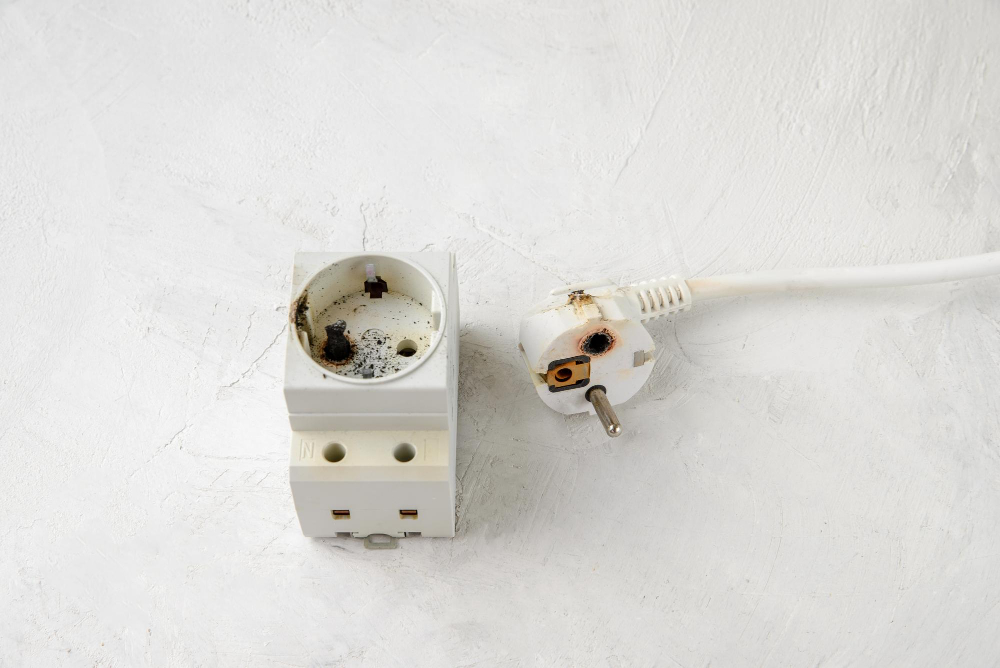
Burn marks around your outlets appear as black or brown discoloration on the wall plate or surrounding paint. These marks indicate that excessive heat from a power surge has scorched the plastic components or nearby materials.
You might notice melted plastic around the outlet opening or on the plug itself. The scorch marks often start small but spread over time if the damaged outlet continues receiving power.
Check for soot-like residue that wipes away when touched. This carbon buildup forms when electrical arcing occurs inside the outlet box. According to the Electrical Safety Foundation International, arcing faults are responsible for starting more than 28,000 home fires each year in the United States, causing hundreds of deaths and over $700 million in property damage.
Burn marks near specific outlets mean those circuits absorbed significant voltage spikes. Any visible burning requires immediate attention because the internal wiring may have sustained damage that poses a fire risk.
Your breakers trip more often after power surges because the surge weakens their internal mechanisms. A healthy breaker should rarely trip under normal use.
When surges damage the breaker, it becomes overly sensitive and trips with regular electrical loads. You'll notice the same breaker switching off multiple times per week or month.
The breaker itself may feel warm to the touch even when not tripping. This warmth shows internal resistance has increased due to surge damage.
Some breakers won't stay in the "on" position after tripping, requiring multiple reset attempts. This behavior means the breaker's trip mechanism has worn down and needs replacement.
Outlets that feel warm when you touch them indicate internal resistance from surge damage. Normal outlets stay cool or slightly warm during use.
Press your hand against the outlet cover plate. If it feels noticeably warmer than room temperature without anything plugged in, the wiring has likely sustained damage.
Discoloration appears as yellowing, browning, or gray spots on white outlet covers. This color change happens when heat repeatedly affects the plastic over time.
The outlet may also show small cracks or warping around the plug openings. These deformities develop when internal heat softens and distorts the plastic housing. If you spot any of these signs, an electrician should inspect the outlet and wiring before you continue using it.
Major appliances like your HVAC system, refrigerator, and washing machine often show the first signs of surge damage through performance changes and unusual behavior. These expensive systems contain sensitive electronic controls that can malfunction even from minor voltage spikes.
Your heating and cooling system is one of the most vulnerable appliances in your home because it draws high amounts of power and cycles on and off frequently. The control boards, capacitors, and compressors in your HVAC unit contain delicate circuits that can't handle sudden voltage increases.
When a power surge damages your HVAC system, you might notice it struggles to maintain the set temperature or cycles on and off more often than normal. The thermostat may become unresponsive or display error codes you haven't seen before.
Compressor failure is a common and expensive result of surge damage. You might hear clicking sounds when the system tries to start but fails, or the outdoor unit may not turn on at all even though the indoor fan runs normally.
Your refrigerator, dishwasher, washing machine, and dryer all rely on electronic control panels that power surges can damage. These appliances might start acting strangely after a surge event, even if they still appear to work.
A refrigerator damaged by a surge may run constantly without reaching the proper temperature, or the ice maker and water dispenser might stop working while cooling continues. Your washing machine could get stuck mid-cycle or refuse to advance to the spin cycle.
Digital displays on appliances often fail after surge damage. You might see blank screens, flickering numbers, or error messages that won't clear. Some appliances will work partially but certain features stop responding to button presses or touch controls.
Appliances damaged by power surges often make sounds they shouldn't. These noises indicate that internal components have failed or circuits are trying to operate incorrectly.
Common surge-related appliance noises include:
Your dryer might make loud banging sounds if the motor control board was damaged. A dishwasher could buzz continuously without filling with water. These unusual sounds mean electrical components are receiving incorrect signals or failing to operate properly due to surge damage.
Weather events and power grid disruptions create voltage spikes that enter your home's electrical system through service lines and can damage connected equipment. Lightning strikes and utility switching operations generate the most powerful surges, while older homes often lack adequate protection against these events.
Lightning carries millions of volts and can strike your home directly or hit nearby power lines and travel into your electrical system. When lightning enters through your service line, it moves through your electrical panel and spreads to every outlet and hardwired appliance in your home.
The surge doesn't need to hit your house to cause damage. Lightning strikes within a mile of your property can create voltage spikes strong enough to fry circuit boards and destroy sensitive electronics. According to the U.S. Fire Administration, an estimated 17,400 fires are attributed to lightning each year in the United States, resulting in approximately 10 civilian deaths, 75 injuries, and $138 million in property damage annually.
Common damage from lightning-related surges includes:
You might see scorch marks near outlets or smell burning plastic after a nearby strike. Some damage happens silently and weakens components that fail weeks or months later.
Power outages followed by restoration create voltage spikes as electricity returns to the grid. The sudden rush of power when service comes back online pushes excess voltage through your home's wiring system. Having a standby generator provides a controlled power source during outages and avoids the restoration spike entirely.
Rolling blackouts and planned utility maintenance cause the same voltage fluctuations. Each time power cuts off and restarts, your electrical system experiences stress from the rapid change.
Grid switching operations also generate surges when utility companies reroute power between substations. These events happen regularly during high-demand periods and you won't receive any warning.
Signs of restoration surge damage:
Most homes built before 2000 lack whole-home surge protection at the electrical panel. Point-of-use surge protectors you plug into outlets only guard the devices connected to them and can't handle large voltage spikes from external sources. According to the Electrical Safety Foundation International, the 2020 National Electrical Code now requires whole-home surge protectors in new residential construction, but the vast majority of existing homes, including most of the housing stock across Ithaca, Trumansburg, Cortland, and the broader Finger Lakes region, were built long before this requirement.
Older electrical panels weren't designed to accommodate modern surge protection devices. Many contain outdated breakers that don't respond quickly enough to stop damaging voltage from reaching your appliances.
Homes with aluminum wiring or ungrounded outlets face higher risk because these systems can't safely dissipate excess electrical energy. The lack of proper grounding gives surge energy nowhere to go except through your connected devices.
Small electrical problems don't stay small for long. What starts as a flickering light or occasional power surge can damage your appliances, create fire risks, and cost thousands in repairs if left unaddressed.
Power surges from unresolved electrical issues send excess voltage through your home's circuits. This extra electricity forces your appliances to work harder than designed. Your refrigerator, television, computer, and other electronics contain sensitive components that can't handle these voltage spikes.
Each surge weakens the internal circuits of your devices. The damage happens gradually, and you might not notice it right away. Your appliances start breaking down earlier than expected.
A refrigerator that should last 15 years might fail after 8. Your expensive television could develop display problems or stop working entirely. Air conditioners, washing machines, and dishwashers all face the same risk.
The cost adds up quickly when multiple appliances fail prematurely. Catching surge damage early and addressing the root cause in your electrical system costs far less than replacing a house full of electronics.
Faulty wiring creates heat at connection points where electricity flows improperly. This heat builds up inside your walls where you can't see it. The insulation around the wires starts to break down and become brittle.
Damaged insulation exposes bare wires that can spark when they touch metal or other wires. These sparks can ignite nearby materials like wood framing or insulation. Electrical fires spread quickly once they start.
Your circuit breakers should trip when problems occur, but they don't always catch gradual deterioration. Overloaded circuits and loose connections bypass these safety features. The warning signs include burning smells, discolored outlets, or warm switch plates. A fire alarm system provides an additional layer of protection if a hidden electrical fault develops into a fire.
Minor electrical repairs cost relatively little when addressed early. Replacing a single faulty outlet or fixing a loose wire connection is straightforward work for a licensed electrician.
Wait too long, and that same outlet problem can spread through the circuit. You'll need to rewire entire sections of your home. A small wiring issue that causes a fire leads to thousands or tens of thousands in property damage.
The electrical problems also multiply. One bad connection puts stress on other parts of the system. More outlets fail, circuits overload, and your panel shows signs of wear. What started as a simple fix becomes a whole-system upgrade.
Basic power strips offer limited defense against voltage spikes, while whole-home systems provide comprehensive protection for all connected devices. Regular electrical inspections help identify damage and prevent future problems.
Standard power strip surge protectors only guard the devices plugged directly into them. They cannot protect hardwired appliances like HVAC systems, water heaters, or dishwashers.
These basic protectors handle small voltage spikes but fail during major surges from lightning strikes or utility grid problems. Most power strips have a limited joule rating between 1,000 and 2,000 joules, which depletes over time with each surge they block.
The protection wears out without any visible warning signs. Your power strip may look fine but provide zero surge protection after absorbing multiple hits. You need to replace these devices every few years, but most people forget until damage occurs.
A whole-home surge protector installs at your main electrical panel and protects every circuit in your house. This device diverts dangerous voltage spikes safely to the ground before they reach your wiring or appliances.
These systems handle much larger surges than outlet protectors, typically rated for 40,000 to 80,000 amps. They protect expensive hardwired equipment that power strips cannot reach.
Whole-home surge protection guards against both external surges from lightning and internal surges from appliances cycling on and off. The protection works continuously for your entire electrical system.
Professional installation connects the device directly to your service panel. This ensures proper grounding and maximum effectiveness for your home's specific electrical setup. An upgraded panel with a whole-home surge protector gives you the strongest possible defense against voltage spikes.
You should schedule an inspection within days of a major power surge or lightning strike near your property. An electrician can test your system for hidden damage that might cause problems later.
Inspectors check your breaker panel, wiring connections, and GFCI outlets for signs of heat damage or burns. They test voltage levels to confirm your electrical system operates within safe ranges.
The inspection includes reviewing your surge protection devices to verify they still function correctly. Many whole-home protectors have indicator lights that show when protection fails and replacement is needed.
Your electrician may recommend upgrading older wiring or adding additional protection points. These improvements prevent future surge damage and increase safety throughout your home.
Power surges are not a matter of if but when, especially in a region that sees its share of summer thunderstorms, winter ice events, and utility interruptions. The damage from a single large surge or years of smaller ones adds up in fried electronics, shortened appliance life, and hidden wiring problems that create real fire risk.
If you've noticed any of the symptoms in this guide, from flickering lights and warm outlets to appliances that have been acting strangely since the last storm, your electrical system is telling you something. The longer those signs go unaddressed, the more expensive the repair and the greater the safety hazard.
A licensed electrician can inspect your system, identify damage you can't see, and install whole-home surge protection that covers every circuit in your house. Contact Pleasant Valley Electric to schedule an inspection or discuss surge protection options. The team has been handling residential electrical work across Ithaca and Tompkins County since 1983, and they can help you get ahead of the next surge instead of cleaning up after it.
Whether you are dealing with flickering lights, outdated wiring, breaker problems, or planning a larger electrical upgrade, Pleasant Valley Electric is here to help. Our licensed electricians provide dependable service, honest recommendations, and fast response times throughout Ithaca and surrounding communities.
We call you back within 30 minutes during business hours.